
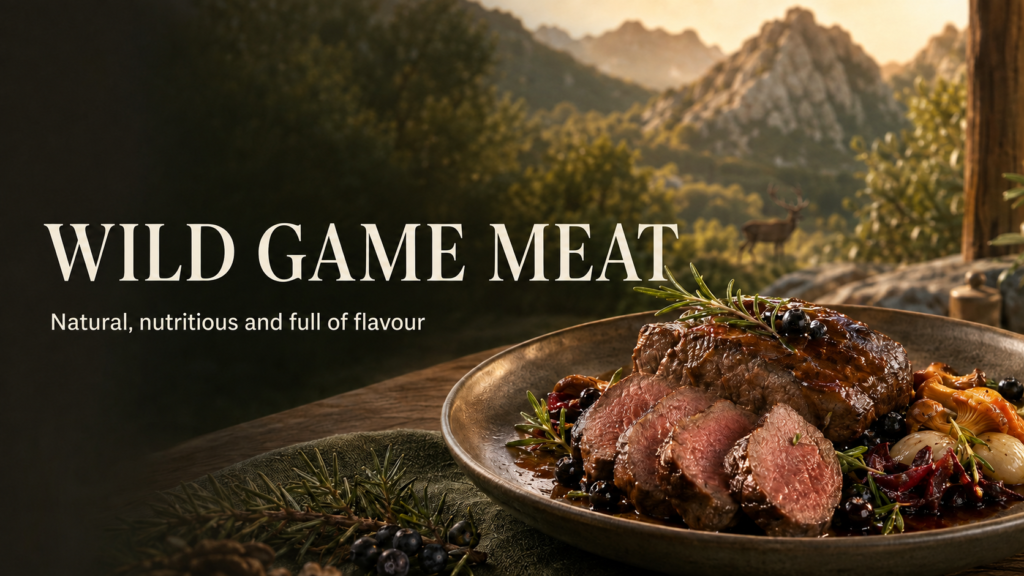
Wild game meat: a natural, nutrient-rich food full of flavour
Wild meat was long considered a product reserved mainly for hunters, families from rural areas, and specialised restaurants. Today, however, more and more nutritionists, chefs, and consumers are discovering its unique qualities.
Deer, wild boar, roe deer, fallow deer, mouflon, partridge, or wild rabbit belong to a traditional cuisine that responsibly makes use of what nature provides. In addition to its intense and authentic flavour, wild game meat has a highly interesting nutritional profile.
An excellent source of protein
Wild game meat provides high-quality protein and contains the essential amino acids our body needs to maintain and repair muscles and tissues.
This makes it especially suitable for active people, athletes, and anyone who values a varied and protein-rich diet.
Less fat than many conventional meats
Wild animals live in the wild, travel long distances, and feed on the natural resources of their habitat. Due to this constant movement, their meat is generally very lean.
Numerous studies show that wild game meat often has a low fat content and a high protein content. However, its exact composition depends on the species, age, season, natural diet, and specific cut.
Venison loin, for example, is considered protein-rich and provides significant amounts of zinc and vitamin B12, while its fat content is comparatively low.
Rich in iron, zinc, and vitamin B12
One of the greatest nutritional advantages of wild game meat is its content of essential micronutrients.
These include:
- Iron, which is needed for haemoglobin formation and oxygen transport in the body.
- Zinc, which contributes to the normal function of the immune system.
- Vitamin B12, which is important for the nervous system and the formation of red blood cells.
- Phosphorus and selenium, which are involved in numerous bodily processes.
- B vitamins, which play an important role in energy metabolism.
Meat contains so-called haem iron. This form of iron is more easily absorbed by the human body than the iron found in many plant-based foods.
Natural and also sustainable
The consumption of meat from responsible hunting allows a valuable natural resource to be used wisely, one that might otherwise be lost.
Regulating certain wild populations is necessary to maintain ecological balance, reduce agricultural damage, prevent wildlife accidents, and control the spread of diseases. When carried out responsibly and under control, this regulation allows harvested game meat to be used sustainably.
Eating wild game meat also supports rural areas, preserves traditional recipes, and gives special value to a food that is closely connected to its origin.
From the field to the table
Meat quality begins immediately after the animal is harvested. Quick retrieval, proper field dressing, rapid cooling, and maintaining the cold chain are essential for shelf life, flavour, and tenderness.
In addition, wild game meat intended for human consumption must undergo mandatory health inspections. In the case of wild boar, testing for trichinella is essential.
The Spanish Agency for Food Safety and Nutrition warns that wild boar meat without proper inspection can transmit trichinellosis. Curing, smoking, or drying are not sufficient to eliminate the parasite safely. The meat must come from inspected carcasses and be properly cooked. More information can be found in the official AESAN recommendations on trichinella.
Is wild game meat always tough?
No. Tenderness depends on several factors: the species, the animal’s age, the cut, how the meat is handled, and above all, the cooking method.
Very tender cuts are suitable for pan-frying or grilling and should not be overcooked. Other cuts develop their best flavour through marinating and slow cooking—such as in stews, ragouts, or traditional game dishes.
The key is to understand each cut and choose the appropriate cooking method.
Much more than just food
Wild game meat combines nature, responsible wildlife management, tradition, and gastronomy. It is a characterful food, rich in protein and essential micronutrients, generally low in fat, and highly versatile in the kitchen.
But wild game meat also tells a story: the story of its origin, the work in the field, and the respect for every animal harvested.
At Caza Alicante, we believe that a hunting experience does not end with the shot. True use begins when the meat is handled with care and reaches the table as a healthy, flavourful food closely connected to our landscape.
Because respect for hunting also means making full and responsible use of the game.